
COLD ROOM PRICES IN KENYA
Cold room prices in Kenya depends on several factors, including the size of the room, storage capacity, required temperature, insulation materials, refrigeration equipment, electrical requirements, and installation location.

0-3048×4064-0-0-{}-0-12#bokehtype:0#;illum:2 scene:0 humanIn:1;
A small walk-in cold room for a restaurant will generally cost less than a large industrial cold storage facility designed to accommodate hundreds of tonnes of agricultural produce.
Understanding these factors helps businesses plan their budgets, select appropriate refrigeration systems, and make informed investment decisions.
How Much Does a Cold Room Cost in Kenya?
cold room prices in Kenya vary depending on the project specifications and the quality of equipment used. Based on published Kenyan supplier estimates for 2026, a basic commercial cold room may cost approximately KSh 400,000, while larger industrial installations can cost several million shillings.
The following figures provide indicative budgeting ranges for standard commercial installations. They are estimates rather than fixed market prices, and the final quotation depends on the design and site requirements.
Estimated Cold Room Installation Prices in Kenya
| Cold Room Category | Approximate Capacity by Volume | Estimated Installation Cost |
|---|---|---|
| Small cold room | 10–20 m³ | KSh 400,000–800,000 |
| Medium cold room | 20–50 m³ | KSh 800,000–2,000,000 |
| Large cold room | 50–100 m³ | KSh 2,000,000–3,500,000 |
| Extra-large cold room | Above 100 m³ | From KSh 3,500,000 |
| Industrial cold storage facility | Project-specific | Several million shillings or more |
Factors That Affect Cold Room prices in Kenya
Several technical and commercial considerations determine the final cold room prices in Kenya
A. Size and Storage Capacity
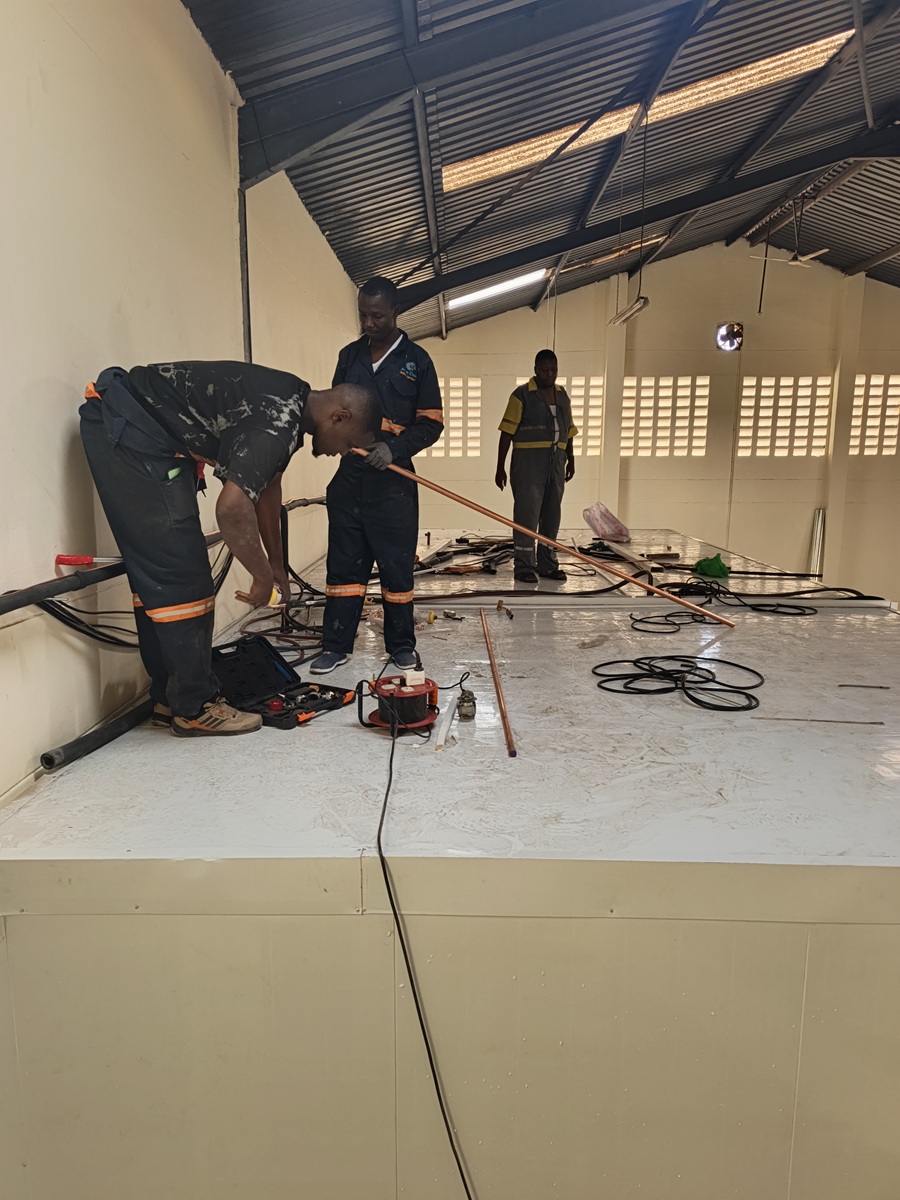
The size of a cold room is one of the most significant factors affecting installation costs.
A larger room requires more insulation panels, a larger floor area, additional ceiling materials, and a refrigeration system with sufficient capacity to maintain the desired temperature.

0-3048×4064-0-0-{}-0-12#bokehtype:0#;ts:4424226510120813;appts:1788775299238;qlty:1;;illum:2 scene:24 humanIn:1;
However, storage capacity should not be by room volume alone. The arrangement of products, stacking height, pallet dimensions, ventilation clearances, and access routes also influence the usable storage capacity.
For example, a cold room designed to store 20 tonnes of potatoes will have different requirements from one designed to store 20 tonnes of frozen meat.
Before installation, the contractor should establish the expected storage capacity, product loading patterns, and available space.
B. Required Storage Temperature
The required operating temperature directly affects the refrigeration equipment and insulation specifications.
Chiller rooms: These maintain temperatures above freezing and are commonly used for fresh produce, dairy products, beverages, and other chilled goods. The exact temperature depends on the product.
Freezer rooms: These operate below freezing and commonly maintain temperatures around -18°C to -25°C for frozen products, depending on the application.
Blast freezers: These rapidly reduce product temperature and generally require more powerful refrigeration equipment than conventional freezer rooms.
Specialized cold rooms: Pharmaceutical storage, flower preservation, and certain agricultural applications may require precise temperature control, humidity management, and continuous monitoring.
Freezer rooms and blast freezers generally cost more than comparable standard chiller rooms because of their higher refrigeration demands and additional insulation requirements.
C. Insulation Panel Thickness and Quality
Insulated panels form the walls and ceiling of a cold room. They reduce heat transfer from the surrounding environment and help maintain stable internal temperatures.
Common insulation materials include polyurethane (PU) and polyisocyanurate (PIR) sandwich panels.
The panel thickness must be selected according to the operating temperature, environmental conditions, and required thermal performance.
Thicker panels are generally required for lower-temperature applications. Panel quality, joint construction, density, and installation workmanship also influence the room’s performance.
Although lower-cost insulation may reduce the initial investment, inadequate insulation can increase compressor running time and electricity consumption.
A properly insulated cold room can therefore offer better long-term value through reduced energy consumption and more stable temperature control.
D. Refrigeration Equipment and Compressor Capacity
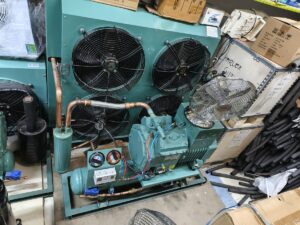
The refrigeration system is a major component of the cold room prices in Kenya.
A typical cold room refrigeration system includes:
- Condensing unit.
0-4064×3048-0-0-{}-0-12#
- Compressor.
- Evaporator.
- Refrigerant piping.
- Refrigeration valves and accessories.
- Temperature controller.
- Electrical control panel.
- Fans and associated components.
The equipment must be selected according to the calculated refrigeration load.
Important considerations include the room dimensions, insulation performance, ambient temperature, product temperature at loading, quantity of products entering the room, door-opening frequency, and the required pull-down time.
Equipment brands, compressor technology, energy efficiency, availability of spare parts, and warranty terms can also affect the purchase price.
Choosing an undersized refrigeration system may prevent the room from reaching its required temperature, while an unnecessarily oversized system can increase capital costs and create operating problems.]
How to Reduce Cold Room prices in Kenya
Businesses can control their installation budgets without compromising the performance and reliability of the refrigeration system.
The following measures are recommended:
Choose the correct room size: Determine the required storage capacity before construction to avoid paying for unnecessary space.
Use appropriate insulation: Select panels that meet the actual temperature requirements rather than choosing materials solely on their initial price.
Select properly sized refrigeration equipment: A correctly calculated refrigeration load helps prevent underperformance and unnecessary expenditure.
Compare different equipment options: Evaluate the cost, energy efficiency, warranty, availability of spare parts, and expected maintenance requirements.
Prepare the site in advance: Ensure that the floor, drainage, electrical supply, and equipment location are suitable before installation begins.
Plan the layout carefully: Position doors, evaporators, and storage areas to support efficient product movement and airflow.
Consider energy efficiency: Efficient refrigeration equipment, good insulation, suitable controls, and well-sealed doors can reduce long-term electricity costs.
Schedule regular maintenance: Preventive servicing helps identify faults early and reduces the risk of costly breakdowns.
Obtain multiple quotations: Compare at least three detailed quotations from qualified cold room installation contractors.
The cheapest quotation is not necessarily the best option. Equipment specifications, installation quality, warranty coverage, and after-sales support should all be considered.
Conclusion
cold room prices in Kenya in Kenya depend on the size of the facility, required storage temperature, insulation specification, refrigeration equipment, electrical infrastructure, and site conditions.
A small commercial cold room may require an investment of several hundred thousand shillings, while large industrial cold storage facilities can cost several million shillings or more.
The best approach is to establish the required storage capacity, identify the products to be stored, determine the appropriate operating temperature, and obtain a professional technical assessment before committing to an installation.
Investing in a properly designed and professionally installed cold room helps businesses preserve product quality, minimize spoilage, improve operational efficiency, and protect the long-term value of their refrigeration equipment.
