
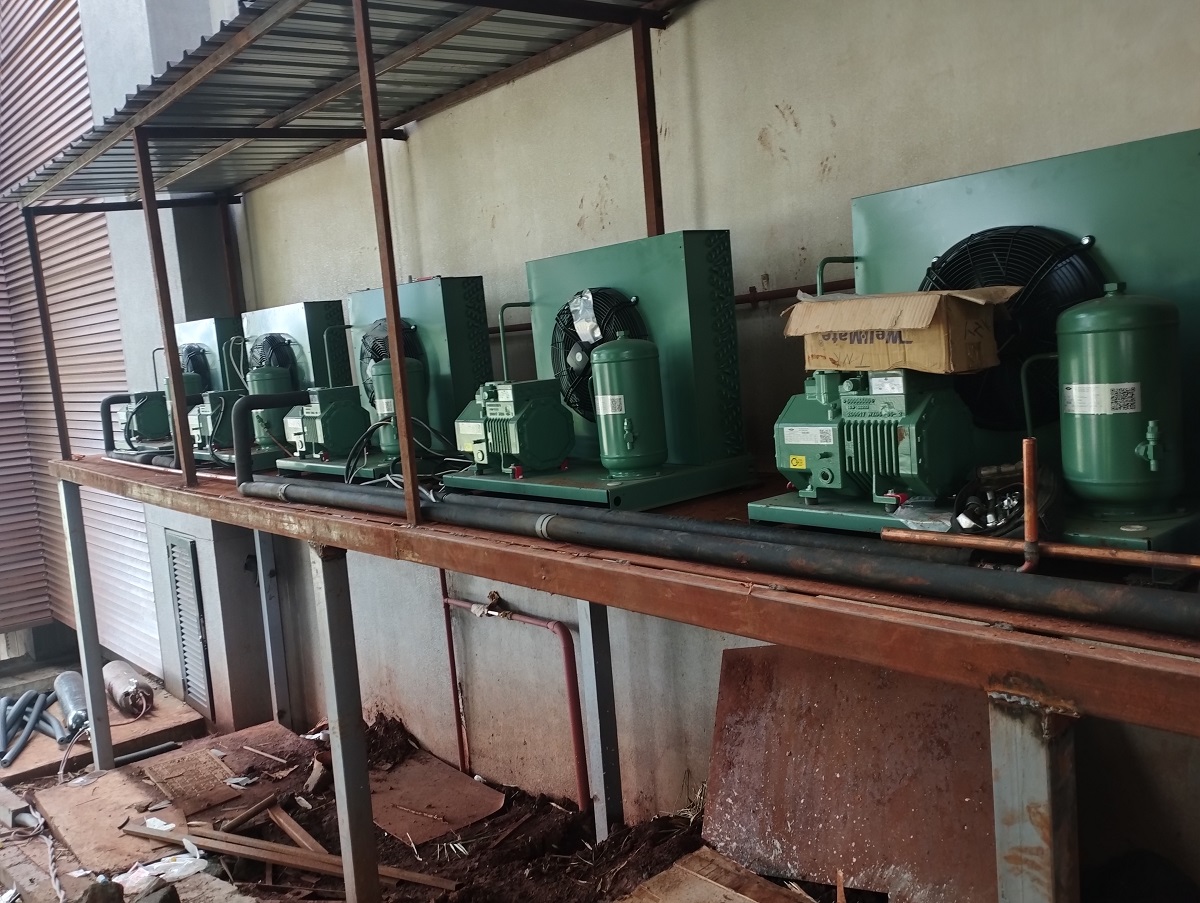
Components of a cold room
Components of a Cold Room and clean rooms share similarities in that both require precise control over airflow and temperature. However, while clean rooms must maintain an environment free from contaminants, dust, or dirt to ensure purity, cold rooms focus on maintaining very low temperatures to preserve their contents.
The structure of cold rooms varies depending on their specific use, but all cold rooms share certain fundamental characteristics, including their refrigeration systems. Despite the variety in refrigeration systems, their operation generally follows a standard approach.
Like clean rooms, cold rooms have essential components designed to maintain their required conditions, paying attention to even the smallest details.
Cold Room Flooring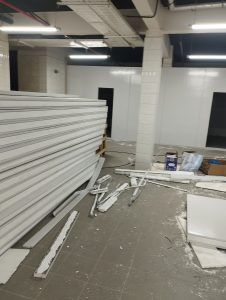
The choice of flooring for a cold room depends on its temperature and specific needs. Flooring must endure freezing temperatures, be easy to clean, support heavy equipment, and be slip-resistant, stainless, and non-absorptive. Polyaspartic and urethane coatings are effective as they cure quickly even in cold conditions.
Cold Room Panels
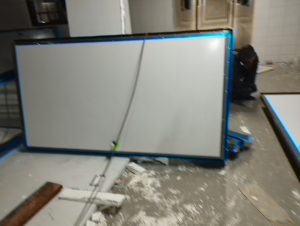
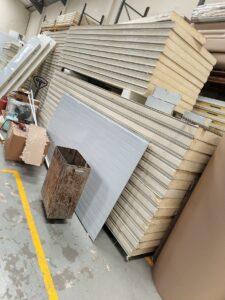
Cold room panels vary depending on the temperature rating of the cold room. An essential feature of these panels is their ability to prevent leakage and ensure a tight seal to minimize energy loss. They form the walls and ceilings of cold rooms and play a crucial role in temperature control and insulation, similar to panels used in clean rooms.
Cold Room Doors on Components of a Cold Room
In addition to the number of doors for a cold room, the quality and type of doors are crucial for accessing and maintaining the seal of the cold room.
- Horizontal sliding
- Vertical sliding
- Hinged
- Service doors
- Specialized doors
- Fold-up
Cold Room Refrigeration System
Key components of a refrigeration system include a compressor, condenser, expansion valve, evaporator coils, and circulation fans. Additionally, the system uses refrigerant gases, such as ammonia, freon, or CO2, to achieve and maintain the desired temperature.
Condenser – The condenser is Components of a Cold Room and clean rooms share similarities in that both require precise control over airflow and temperature a heat exchanger where heat from the refrigerant is transferred to a flow of water that goes to a cooling tower. In the condenser, the refrigerant is under constant pressure, which is controlled and monitored. The hot gas of the refrigerant is cooled to a liquid.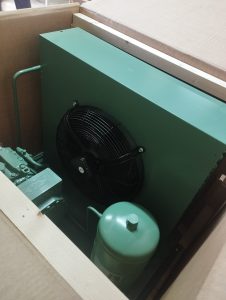
Expansion Valve – In the expansion valve, the refrigerant expands, releases pressure, and experiences a temperature drop. The refrigerant leaves the expansion valve as a liquid vapor mixture. Expansion valves maintain the pressure differential and control the amount of refrigerant that enters the evaporator.
Evaporator – In the evaporator, the refrigerant is at a lower temperature, evaporates, and absorbs heat. From the evaporator, the refrigerant enters the compressor where the process begins again.
Cool Fan – The cooling fan circulates the low temperature of the refrigerant in the evaporator into the cold room to help maintain the set temperature of the cold room. They ensure even distribution of the cold air and reduce any temperature variations.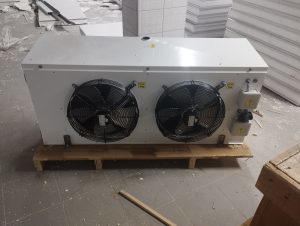
Compressor – The type of compressor for a cold room is determined by the size of the cold room and its desired temperature. Reciprocating compressors use a piston to create positive displacement to move refrigerant gases at high pressure. They are used in cold rooms with a small capacity.
Considerations for Components of a Cold Room
When choosing high-performance panels for cold rooms, it is essential to consider:
- Thermal Conductivity:
- Panels with low thermal conductivity ensure effective insulation.
0-3048×4064-0-0-{}-0-12#
- Panels with low thermal conductivity ensure effective insulation.
- Fire Resistance:
- Fire-resistant panels enhance safety and compliance with local building codes.
- Moisture Resistance:
- Panels should resist moisture to maintain insulation properties and prevent damage.
- Ease of Installation:
- Opt for easy installation panels, reducing construction time and labor costs.
In conclusion, high-performance panels for walls and ceilings are pivotal in constructing energy-efficient cold rooms. By choosing the right type of panel according on specific requirements, energy efficiency, and operational costs can significantly improve.
