
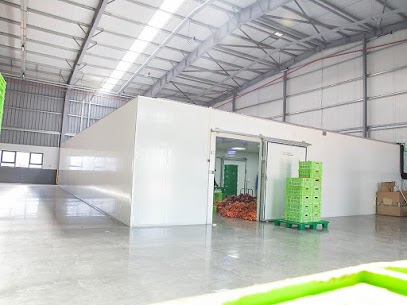
Importance of Cold rooms in Nairobi- Kenya
Importance of Cold rooms is that they are engineered to meet the long-term storage needs of industries handling perishable goods or sensitive equipment. Each industry selects a cold room tailored to its specific requirements and specifications. The need for cold storage spans a diverse range of industries, each with distinct standards and applications.
Commercial Cold Rooms
Commercial cold rooms are in design for caterers, retail outlets, and small businesses. These versatile units can adapt to a variety of applications and business needs. Depending on the investment, commercial cold rooms are custom made to meet the specific requirements of each business or enterprise.
Vegetable and Fruit Cold Rooms
Vegetable and fruit cold rooms and freezers are among the most common applications for cold storage, designed to keep produce fresh and minimize losses. Given their widespread use, there are numerous models available, each offering various refrigeration methods and atmospheric controls. These cold rooms come in a range of prices to suit different business budgets.
Florist Cold Rooms
Cold rooms for flowers are in design to be highly adaptable to meet the specific needs of different plant species. They aim to extend the freshness of flowers by slowing their metabolism and delaying the aging process.
Pharmaceutical Cold Rooms
To ensure that vaccines and medicines maintain their efficacy, they must be in store under precise and stable temperature conditions. Cold rooms, with their tight seal construction, are commonly in use to preserve pharmaceutical products and medications, providing the necessary environmental controls to maintain their intent effects.
Automobile Wind Tunnel Testing
A unique application of cold rooms is in wind tunnel testing for automobiles, where temperatures can drop to -30°C (-22°F) and wind speeds can reach 130 km/h (80 mph). Known as climate tunnels, these specialized wind tunnels are design to replicate various weather conditions, including extreme cold, to test the performance and durability of vehicles under simulate environmental stresses.
Meat Freezer Cold Rooms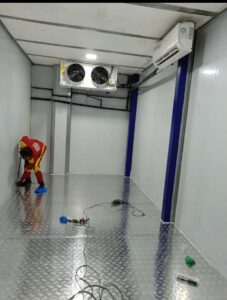
The meat industry relies heavily on cold rooms, starting from slaughterhouses and extending through storage, logistics, and sales. Every stage of meat handling necessitates cold rooms to preserve the flavor, texture, and appearance of the meat. Any lapse in this process can lead to significant losses. Types of cold rooms used in the meat industry include:
- Meat Cool Rooms for short term storage with temperatures ranging from 0°C to 5°C (32°F to 41°F).
- Meat Freezers that are in use for long-term storage with temperatures below -18°C (-22°F).
- Blast freezers that are in use for rapid freezing to preserve meat for long periods.
- Logistic Cool Rooms are for short-term storage during distribution.
Laboratory Cold Rooms
In research and experimentation, precise temperature control is crucial to prevent environmental factors from affecting results. Precision-designed cold rooms with flexible temperature controls are essential in laboratories across various fields, including chemical, biological, physics, electronic engineering, environmental science, and pharmaceuticals. These cold rooms ensure optimal conditions for developing and testing new products and theories. Due to the nature of the work, laboratory cold rooms often feature explosion-proof designs, precision instrumentation, low oxygen controls, and ultra-sensitive temperature controls.
What are the Importance of Cold rooms?
Cold room systems are highly efficient solutions for cold storage across industrial, retail, and commercial applications. Unlike standard refrigerators, cold rooms are in design for more substantial and long-term cold storage, offering durability and stability. Commonly referred to as freezers and chillers, cold rooms provide a level of performance and reliability that cannot be in match by other types of equipment.
Internal Volume
The most distinguishing feature of cold rooms compared to refrigerators or freezers is their large internal volume, making them ideal for storing bulk quantities of perishable goods. This capability is a key reason for their widespread use across various industries.
Economical
The operating system of a cold room is precisely controlled to maintain a stable and consistent temperature. This meticulous control helps prevent fluctuations, minimizing energy waste and reducing electricity and power consumption.
Flexibility
With adequate space and power, cold rooms can be installed almost anywhere. Their diverse sizes and footprints allow them to fit into both narrow, restrictive spaces and expansive areas. Essentially, there is a cold room solution for any industry requiring cold storage.
Cold rooms can be in design as chillers, freezer rooms, or ambient areas depending on the required temperature ranges. For instance, walk-in freezer rooms can maintain temperatures from 0°C to -40°C (32°F to -40°F). The versatility and ease of use make cold rooms ideal for a variety of conditions.
Product Protection
The tightly sealed construction of a cold room allows it to maintain low temperatures for extended periods, even during power outages. With the addition of remote controls, backup generators, and emergency power systems, cold rooms can continue to function effectively, even in the event of a prolonged power interruption.
Reduction of Spoilage
The consistent and stable temperature of a cold room ensures that stored items are maintained at a uniform temperature over extended periods. This steady environment, coupled with the refrigeration system’s control of moisture, helps extend the shelf life of stored products.
Organization
The organizational features of cold rooms facilitate easy inventory control and access to products and materials. With shelves, wall units, and other organizational tools, products can be efficiently positioned and retrieved, simplifying counting and usage.
